Showing posts with label Entertainment. Show all posts

Thursday, December 13, 2012

Biography: Curly Howard


We all remember Curly Howard as the funniest member of the legendary Three Stooges.  Everyone, young and old alike, remembers him as the portly bald comedian with the high voice, whose zany antics have entertained us for three quarters of a century now.  Just the mere thought of hearing his "Soitenly," or "Woo-Woo-Woo" can bring a smile to even the most sour of faces.  Curly is so beloved and familiar to so many, yet most of us are surprised to realize how little we really know about the man behind the laughter.

The man who would become everyone's favorite stooge was born Jerome Lester Horowitz on October 22, 1903.  The youngest of five sons born to parents Jennie and Solomon Horowitz, Curly and his brothers grew up in the Bath Beach resort section of Brooklyn, New York.  Young Jerome was a well-loved and happy child.  Nicknamed "Babe" by his brother Moe, he was a quiet child who gave his parents little trouble.  This was probably a good thing, because the mischief caused by his older brothers Moe and Shemp made up for Babe's reserved behavior in spades!

He idolized his older brothers, and made a habit of following them wherever they went.  In fact, it was Moe and Shemp who gave Curly his interest in comedy.  When he was four, they began staging impromptu performances to entertain their friends, and would often include him in the cast.  The trio would give performances in the basement of their home, and invite everyone in their neighborhood to see them for an admission of two cents!  This gave Curly a love for the art of comedy that only grew as he got older.  In addition to comedy, he also loved musicals.  Moe encouraged this interest, and helped to broaden his kid brother's theatrical education by taking him to vaudeville shows and melodrama theaters when he was growing up.

Jerry, as he was often called by family and friends, was only a fair student in school.  Several friends and family members confirm that he was a superb athlete who excelled at basketball.  In fact, many who were close to him have gone on record as saying that his love for athletics was probably the only thing that kept him in school long enough to graduate.  He did manage to graduate, however, and afterwards kept himself busy doing odd jobs.  Jerry also had a great appreciation for music that began in his teens and stayed with him for the remainder of his life.  He loved to dance, and was known to be a very good ballroom dancer.  He could also play the ukulele, and often used it to accompany himself when he sang.  According to Moe, he had a very beautiful singing voice, a trait which put him in high demand socially.
Throughout his childhood and well into his early twenties, Curly's interest in show business continued to grow.  In 1928, he landed his first job as a comedy musical director for the Orville Knapp Band.  He was billed as the guest conductor, who would come out in a breakaway suit which fell away piece by piece as he stood there swinging the baton.  Moe later recalled that his performances regularly stole the show.  After this, he continued to watch his brothers perform.  He often hung around backstage, and sometimes ran errands for those in the cast, like fetching sandwiches or coffee.  His big break finally came in 1932.  His brothers, were performing as "stooges" in Ted Healy's vaudeville act, and were booked to do J.J. Shubert's Passing Show.  Just before show time, however, Healy got into a huge argument with Shubert.  He walked off the show, taking Moe with him.

Shemp, meanwhile, decided to remain with the Shubert show, as he had grown tired of Healy's drunken tirades.  Moe then suggested to Healy that his younger brother, Babe, was available to replace Shemp.  He told Healy that Babe would be a natural since he was already familiar with the act.  Healy would only agree on the condition that Curly shaved his head.  Curly complied, and became a member of the team.  The formation of the classic trio was completed with the addition of Larry Fine, whose real name was Louis Feinberg.  He was asked to join the act after Moe and Healy saw him perform in a Chicago nightclub!

It wasn't long before Curly's uniquely wacky style of comedy began to assert itself; first on-stage, and then later on screen when Ted Healy and his Stooges starred in several features and shorts for MGM in the early thirties.  He would also play a large role in the success of The Three Stooges without Ted Healy.  Once they had signed a contract with Columbia Pictures in 1934, it was Curly's standout comedic performances that earned a great deal of notoriety for the act.  He would go on to star in 97 of The Stooges 197 short-subject comedies.

Success came quickly for The Stooges once they were at Columbia.  Unfortunately, when it did, it virtually ruined Curly.  He began to drink heavily, which quickly took its toll.  His shaved head made him feel very self-conscious.  Those who knew him say that he felt as if it robbed him of his masculinity; it made him feel child-like.  Long after his passing, Larry Fine stated in an interview that Curly almost always wore a hat in public in an attempt to reclaim an image of masculinity.  In addition to this, Curly's real personality was the complete and polar opposite of his on-screen character; he was actually very introverted and shy off camera.  In fact, he often felt trapped by his film persona; at times, he felt the need to live up to it, so as not to disappoint fans who would meet him in person.  Although no one can state this as an absolute fact, by most accounts these are believed to be the main reasons for his excessive drinking.
Although he was very successful professionally, Curly's personal life was filled with turmoil.  His finances were always in a shambles; he was never able to save a cent.  He spent lavishly, enjoying what he saw as life's pleasures: wine, women, and fine food.  He was constantly buying new houses, automobiles, or expensive gifts for the ladies in his life.  He also had a great love for dogs, and would spend huge amounts on pedigreed pooches to keep as pets.  His spending habits were so bad, in fact, that Moe eventually stepped in an began to handle his money for him.

Women were another downfall for Curly.  He loved women, and although he was known to be a very sweet and loving man, many who knew him say that he really wasn't mature enough to be able to contribute to a one-on-one relationship; he was restless, and he just never grew up!  Simply put, he was a sucker for a pretty girl, and would fall head over heels for any girl who took an interest in him.  He was a hopeless romantic who was actually more in love with the idea of being “in love” than committing to a real relationship.

It could never be proven, of course, but people who were close to Curly strongly suspected that his second and third wives had only married him because he was a film personality, and they were after his money.  He married four times in all, fathering two daughters along the way; one with his second wife, and one with his fourth.  His first marriage had taken place in his late teens.  He'd married a girl whose identity remains unknown to this day.  However, his mother strenuously objected to the union, and quickly had it annulled.  In fact, with the exception of his fourth wife, Valerie, whom he married on July 31, 1947, every other romantic relationship that Curly had had been miserable for everyone involved.

Moe could see that his younger brother was on a destructive path.  He begged Curly to settle down and take better care of his health.  In fact, he was actually the one who had fixed Curly up with his third wife, in the hopes that a good marriage would change his wild ways.  Unfortunately, the stress and misery of the doomed marriage only worsened his condition.  He suffered a stroke in 1947, during the filming of his 97th Stooge comedy “Half-Wits Holiday,” and was forced to retire from the team in order to recuperate.
For a very brief period of time, it seemed that he was actually on the mend.  He even felt well enough to join The Stooges alongside Moe Larry and Shemp for a small cameo in the 1947 short “Hold That Lion.”  Although Stooge fans may not immediately recognize him here because he had a full head of hair.  Curly is the sleeping man on the train, who does his famous snore/bark when they take his hat from his face!

Sadly, however, a full recovery was not meant to be.  Toward the end of 1947, his health took a turn for the worse.  It was also during this time that he married forth wife Valarie, who would remain by his side, lovingly nursing him through his agonizing final years.  In 1949, he suffered another series of strokes; from there, his health began to decline rapidly and steadily.  Finally, his body just gave up completely, and Curly passed away on January 18, 1952. He was only forty-eight years old.


Sunday, December 2, 2012

CD Review: Lightning Strikes Again, By Dokken


Dokken has recently released their tenth studio album, entitled Lightning Strikes Again, and in my opinion, it is their most impressive collection of new music since their 1999 effort, Erase The Slate.  Shortly before its 2008 release, Don Dokken did a series of interviews in which he repeatedly stated that the new album would be a return to the classic Dokken sound of the mid-Eighties.  I have to admit that I was instantly skeptical when I heard this, because many classic hard rock bands of the period have made that promise, and have failed miserably to deliver.  It often seems that for many of these bands, nostalgia has become their best marketing tool.  In fact, many of them rely on it to keep themselves afloat.  I can assure you that this is absolutely not the case with Dokken's latest venture!

In addition to that fact, there were other reasons for my skepticism as well.  I didn't understand how he could make that claim considering that only two of the original band members remained, and that one of the absent members was George Lynch.  After all, George's guitar sound was a key ingredient in that classic Dokken formula.  While the band's current guitarist, Jon Levin, is a stellar player in his own right, his style is very different from George's.  How in the world could Don ever expect to recreate the band's heyday without George?

Once I heard the album, I had to hand it to Don, though; he delivered on his promise in fine fashion.  LSA is full of the heavy-yet-melodic rock that Dokken is best known for.  Several titles stand out here, including: Standing On The Outside, Give Me A Reason, Heart To Stone, and my personal favorite song, Oasis.

In spite of the fact that George Lynch is MIA, the overall vibe of the album is solidly Dokken; it stands up very nicely alongside their early albums without sounding dated.  Jon Levin effortlessly proves that while he may not be George, he is certainly no slouch; his playing is phenomenal.  For those of you who have not listened to Dokken in a few years, I can promise that one listen to this CD will have you scrambling to find your old vinyl copies of Tooth & Nail or Back For The Attack!

Although I liked some tracks more than others, which I guess is to be expected, there is only one song that I would call a stinker.  I'm referring to the ballad entitled “How I Miss Your Smile.”  The acoustic guitar melody is beautiful on this tune, but for me, the lyric just kills the song.  It is a sappy little scribbling about love gone wrong, which relies entirely too heavily on hokey sentiment for my liking.  Otherwise, the album shines, and I would recommend it highly; it's definitely worth the money!

Tuesday, November 27, 2012

CD Review: Death Magnetic, By Metallica


By the time that Metallica's long-awaited new album, Death Magnetic, hit record store shelves on Tuesday, September 12, 2008, I had already been let down by the band so many times that I no longer trusted them to give me my money's worth.  For several months before it's release, I had been hearing that this album would be a return to their glory days.  Unfortunately, I had heard that from the band when they finished their previous effort, the very dismal sounding St. Anger, back in 2003.  This time around, I just couldn't fall for the hype again.  Needless to say, I approached this album with more than a little trepidation.  To say that I was skeptical would be putting it mildly.

I suppose if I were to be completely honest, there was a part of me that actually wanted to hate this album simply out of spite; hating it would have been the perfect revenge for being disappointed so many times!  Still, no matter how hard I tried to hate it, I just couldn't bring myself to do so!  I have to say that James and the guys have finally delivered on the promise that they made so long ago.  This album is truly amazing from start to finish.  After one listen, all of my doubts had been erased.  I was grinning from ear to ear; at last, the real Metallica is back!

This is the album that should have followed And Justice For All.  In fact, it is not surprising to me that many reviewers have drawn comparisons between those two albums.  When you listen to both of them back-to-back, their does seem to be a very logical progression from one record to the next.  Death Magnetic sounds like what should have been the next step in Metallica's natural evolution following the Justice album.

While some elements of the more recent Metallica sound do remain, they are used differently than they have been in the past.  There is still the great sense of melody that was seen on the Load and Reload albums, but these new elements don't sound as strange on this record, because they are woven into the context of the band's former style, creating a much more subtle change in the band's overall sound.

On Death Magnetic, the band has returned to the more intricate arrangements and complex melodies seen in their earlier albums.  This outing also brings us some blistering guitar solos from Kirk Hammett, which had been noticeably absent in the recent past.  The vocals for all tracks are intense; they really pull you into the song.  There is also some truly outstanding drum work by Lars.  Choosing a favorite track here has proven to be difficult as they are all worthy candidates, but The End Of The Line did stand out to me, as did The Unforgiven III and Cyanide.

I certainly never thought that I would get to say these words again, but fans of Metallica's early work rejoice!  This album is what we have been waiting and praying for since 1988, and our patience has finally paid off!  Go and get it; I promise, you won't be disappointed!

Speculation On The Forthcoming Album By Metallica

Author's Note: The following article was originally written in 2008, just a few weeks prior to the release of Metallica's "Death Magnetic" Album

* * * * *

To be honest, I'm not really sure that this is a subject I even want to speculate on.  I have always been a huge fan of Metallica's early work, but I have to confess that I have been sorely disappointed by all of their more recent releases.  In fact, my feelings on this matter are so strong, that after hearing the songs which were released as singles from these records, I have emphatically refused to buy any of their albums that came after their 1991 self-titled CD, often referred to as “The Black Album.”  Yes, I am one of those old-school metal-heads who feels that the real Metallica has not made a record since their 1988 album ...And Justice For All.

Being a musician myself, I understand the artist's need for growth; artists must grow and change to stretch their creativity.  However, I do feel that if the change is too drastic, then it begins to feel fake.  This is what happened to Metallica.  The musical style that was embraced by the band on their Load album, as well as its successor, the redundantly titled Reload, was just too much of a curve ball for many fans to accept.

The songs on these records were well written and well performed, so the quality of the music is not what I took issue with.  These songs sounded like a completely different band; the music just wasn't Metallica.  I felt that they were trying to be something they weren't just so they could appeal to a wider audience.  I felt that they cheated their loyal fans by doing this, because there was still a lot of unexplored territory and potential for artistic growth within the framework of their former style, and they took the easy way out by making more accessible music that appealed to those who would jump on the bandwagon of any artist who happened to be hot at the moment.

The band's next release did very little to help matters.  The album, 1998's Garage, Inc., was a collection of cover material.  While the guys did return to their metal roots on some of the songs, playing tunes by Black Sabbath and Mercyful Fate, there were also some very odd song choices made.  To me, this band just sounds completely out of their element when covering tracks by the likes of Bob Seger and Queen!

Needless to say, this album was another letdown for me; so you can imagine how stoked I was when in 2003, I heard that Metallica was planning a new release, and that said album would be a return to the old days.  I waited eagerly for the release date, and when it came, I dropped by my local record store to preview the album before buying.  I have to say, St. Anger was not a complete disappointment, as it was heavier than the previous records had been, and some of it was actually tolerable.  But again, I just felt like they had missed the mark.  This album sounded to me like an attempt at the more modern metal sound that was getting big at the time; lots of dropped-tunings, very heavy on the bass, and no guitar solos.  I was crushed.

While I am interested in seeing what the next CD sounds like, I'm sure you can understand that after so many letdowns, I am a bit wary; I don't want to raise my hopes again, only to see them dashed in the end.  I know that the talk about this album is that it will be a return to Metallica's former glory.  I very much hope that this will be the case, but I have heard that song before, and I will not hold my breath to see it happen this time!

Wednesday, November 21, 2012

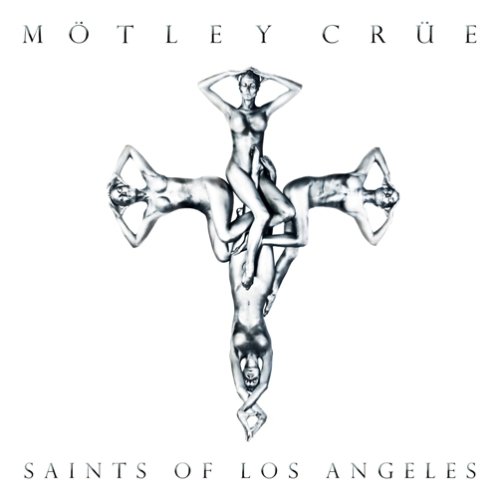
CD Review: Saints Of Los Angeles, By Motley Crue


Being the rock fan that I am, I was really stoked when I heard that Motley Crue would be releasing a new album in the summer of 2008.  The album's first single was the title track, Saints Of Los Angeles.  The song was shipped to radio in advance of the release, and heavily played to promote the record.  It is based on the strength of this tune that I couldn't wait to get my hands on the album.  The song had that classic Crue vibe; it was solid hard rock with an in-your-face attitude.  Needless to say that by the time the release date was finally announced, I was chomping at the bit.  I had already pre-ordered the disc from amazon, and eagerly awaited its arrival.

When it finally came, I was momentarily at a loss.  I was sort of disappointed at first, because I was expecting a classic Motley record that would stand up well next to their 1989 masterpiece, Dr. Feelgood.  Unfortunately, this wasn't what I got.  Don't get me wrong, I am not saying that I hated it or anything...at least, not completely.  However, I have to say that it definitely took me a couple of listens to warm up to this one.  There is more than enough good material here to make the disc worth buying; it has many strong points...one of them being some very menacing guitar work on the part of Mick Mars...but overall, I didn't feel that it was the Crue's best effort.

The album kicks off with a spoken-word intro, reminiscent of the band's 1983 album, Shout At The Devil.  It then segues into the slightly punk-influenced Face Down In The Dirt, which is a decent track, but not one of my personal favorites.  The next track, What's It Gonna Take, was the first that really stood out to me.  It has a great groove, and the wah-wah guitar tone used on the chorus just suits the song perfectly.  Also, this song is one of two...the other being the title track...that contain exceptional vocals by Vince Neil.

Next up, we have Down At The Whiskey.  This is a fun tune, but again, not a favorite.  The music is enjoyable, but the lyric is a downright cheesy ode to the band's club days.  The nostalgic feeling of this song adds to the cheese factor.  I guess I am not terribly interested in hearing a band whose members are now entering middle age attempt to relive the debauchery of their lost youth!  In my opinion, you wouldn't be missing much if you skipped this one altogether.

This brings us to my reason for buying the disc in the first place.  Saints Of Los Angeles is classic Crue in every sense.  The combination of Tommy's thundering drums and Nikki's pounding bass are about as subtle as a concrete baseball bat to the base of the skull, to which Mick's growling guitar is the perfect complement; he really bares his fangs on this one, folks!  On top of all of this, add Vince's shrill shrieks, and viola, instant masterpiece!

I found the track after Saints to be pretty interesting as well.  MF Of The Year is another heavy tune where Mick shines.  As for the remaining tracks, they are cool enough, but in my opinion, there was nothing else of real interest until I got to track eleven, This Ain't A Love Song.  I guess it was just my type of song.  Again, the other tracks aren't necessarily bad, they are just not what appeals to me personally.

I think my biggest problem with this album is that it lacks cohesion; the song styles are all over the place.  This is definitely an album that you will have to hear and judge for yourself, though.  Some may like the tracks that I did not care for, while others may agree with my assessment.  As I said earlier, it's a strong record with enough good songs to make it worth the cash, but overall, not the best Motley Crue record.

CD Review: Anomaly, By Ace Frehley


As a longtime fan of the band with whom he gained fame, I have loved Ace Frehley for a majority of my life.  While he isn't necessarily the most technically proficient guitar player in the world, he has a completely unique style of playing that is all his own.  His sound is instantly recognizable; it was one of the best things about Kiss as a band, and has influenced many people, myself included, to take up the guitar themselves.

Being a loyal fan, I always support Ace's solo efforts, just as I do with every other member of Kiss, both past and present.  That being said, I shouldn't have to tell you that I was among the first in line to purchase his fifth solo album, Anomaly, when it was released on September 15, 2009.  I placed my order that very day.  For the next week, I waited eagerly for the CD to arrive from Amazon.  When it came, I felt a mixture of excitement and nervousness, as I unwrapped it and dropped it into my player for its inaugural spin.

I wasn't really sure what to expect from Ace this time, considering that he had not released a solo album since his 1989 disc, Trouble Walking.  My excitement came from the anticipation of finally hearing the record that he had been promising fans for the last twenty years, but I was nervously hoping that what I was about to hear would be worth it.  Still, I was optimistic in spite of my trepidation, so I hit the play button and tried to keep an open mind.

I wish I could say that I was blown away by this masterpiece, and I spent the rest of the day rocking out as it played over and over.  Unfortunately, that was not the case.  The first time through, Anomaly left me hollow with disappointment.  It actually took a couple of listens for me to get it.  By the third time through, I was starting to hear what Ace was trying for.  The main things that I found fault with on this CD were its lyrics, which in some cases sound like they were written by a fifth grader, and the often sub-standard vocals...most notably on the song Pain In The Neck.

To Ace's credit, the guitar playing remains strong throughout.  The CD does have some really great moments, but to be honest, Anomaly isn't quite as strong of an album as I was hoping for; it isn't completely terrible, but I felt that Ace could have done better.  After all, he'd had more than twenty years to write and record it.  In that amount of time, he could have (and should have) produced a brilliant opus of staggering magnitude.  I mean, heck, that's five years longer than it took for Axl Rose to record the elusive Chinese Democracy for crying out loud!

To be honest, only about half of the twelve tracks here are really good.  Four of them are just so-so, and two of them are flat out stinkers.  In most cases, the lyrics are hopelessly cheesy.  There is even a spoken section in one tune that is just laughable.  On the good side, the few strong tracks that the album does have really do a lot to make up for its multitude of other flaws.  The tracks that really rock here are: Foxy & Free, Outer Space, Sister, Fractured Quantum, an instrumental cut called Space Bear, and a great cover of the Sweet classic, Fox On The Run.

Although it pains me to speak harshly of The Spaceman, I would only recommend this for die-hard loyalists like myself.  The casual fan would probably be bored by it.  Your best bet would be to listen to preview samples and spend a buck a song to download the ones you like, rather than laying out full price for too much filler material.

Sunday, November 18, 2012

CD Review: The Final Frontier, By Iron Maiden


If you have read any of my past music reviews, you know that I have a fairly broad taste in music; I embrace many styles and genres with hard rock and heavy metal being a particular favorite.  Having been a hardcore rock fan since my teens, I am always excited when one of my favorite bands release a new recording.  Even after all these years I still rush to the record store and try to be the first in line to grab the newest efforts by the metal bands I love.  I guess I will forever be a teenager in that regard.

When it comes to finding great metal, the legendary Iron Maiden has consistently managed to stay in my list of the top ten metal bands.  They are one of the bands whose music I never hesitate to purchase, because I know I will like more of their songs than I dislike.  Through the years, they have released some albums that I have liked better than others, but there has never been one that I considered bad enough that it could not be listened to.  Their music has long been known for intricate melodies, meticulously strung into grand, sweeping arrangements.  Their lyrics are filled with imagination, telling stories that you can easily visualize in your head as you listen.

Unfortunately, their latest effort, The Final Frontier, was a huge letdown for me.  I would definitely categorize it as one of their albums that I like less than the others.  It isn't necessarily horrible, but it isn't all that great, either!  It definitely falls short when placed up against their classics.  The sound quality and production are top notch, as always, and there are several good moments on it, but a majority of the record is just bland and boring!

First of all, the record is too long to listen to in a single sitting; it contains ten songs, and clocks in at a whopping seventy-six minutes.  On past albums, they could easily improvise with enough imagination to hold the listener's interest through one of their trademark ten minute arrangements, but that just doesn't seem to be the case here.  The melodies on this record just seem to ramble along without any clear or logical structure, and they are so repetitive that you may find yourself nodding off midway through the song.  Listening to this gave me the impression that the band had just run out of ideas, and had to resort to recycling many of their past riffs.

Also gone is the wonderful lyrical imagery usually present in Iron Maiden songs.  The lyrics, just like most of the melodies, felt completely uninspired to me.  This is particularly true on many of the longer numbers.  They just seem to rattle verse after verse without any clear, strong choruses!  The singing is strong, as Bruce Dickinson's voice has always been top notch, but again, there is just not much in what he is singing to spark your interest.

There are a couple of moments of the old Maiden brilliance on the record to me; tracks seven and eight, titled Starblind and The Talisman respectively, are both excellent songs that are a bit closer to the band's glory days.  Aside from those, the rest of the record just falls flat in my opinion.  As much as it saddens me to say it, this is the first of Iron Maiden's albums to disappoint me, but I guess every great band is allowed to have at least one dud in their album catalog.  Sorry to trash the album after all the work you put into this one guys, but I gotta call it as I see it...better luck next time!

Saturday, November 17, 2012

CD Review: The Song Remains Not The Same, By Black Label Society


I have to start this review by saying that this is one of those albums that you really have to hear for yourself to decide if it is good or not.  In fact, when I first heard it, I wasn't even sure that I wanted to write a review of it because I felt it would be too difficult to accurately describe it!  This is a very odd record for a band like Black Label Society to put out.

Those of you who are familiar with the music of Black Label Society know that the band is one of the loudest and heaviest rock bands in existence.  Their sound is built on Zakk Wylde's throaty, growling vocals, and his wall of massive, bombastic, earth-shaking guitars...both of which possess about as much subtlety as a Louisville Slugger to the base of the skull!

On this CD, all of that changes.  If you do purchase this CD, be prepared for one hell of a curve ball!  The Song Remains Not The Same is a collection of (mostly) acoustic versions of four of the songs from the band's 2010 release The Order Of The Black, with a few outtakes and other assorted odds and ends thrown into the mix for good measure.

Maybe this is just my opinion, but I think this record is just too far "out of character" for this band.  It just didn't sound quite right to my ears to hear this band go unplugged.  Don't get me wrong, listening to this album is not entirely unpleasant; the record isn't necessarily bad, but for me, it was simply too different to be counted among their best work.  I listened to it several times, each time hoping that it would grow on me, but no such luck!

On the good side, the instrumentation is beautiful.  Zakk does some exceptional work on the guitar, and some really great piano playing as well.  However, I think the biggest downfall of this record is the vocals.  Zakk's rough and gritty style of singing is simply not suited for acoustic music or ballads.  In addition, he has always had a grunge-like moan in his voice, very similar to that of Alice In Chains singer Layne Staley.  When he is singing heavy rock, he can pull it off, because the guitars and the overall volume of the music has a tendency to cover that up a bit.  But here, the acoustic instrumentation makes that "moan" in his voice much more pronounced; that became annoying to me after the first few songs!

I know that everyone has different tastes, so in the end, you will have to listen to this and judge for yourself.  In my opinion, though, this was only an average album.  It wasn't completely awful; there were several things that I did enjoy about it, but it just isn't a good representation of what Black Label Society is all about.  If you are new to their music, I would definitely recommend starting with something else.  I would rate this one at about three out of five stars!

CD Review: Scream, By Ozzy Osbourne


For those of us who enjoy heavy metal music, the release of an Ozzy Osbourne album is cause for celebration!  Every serious fan of the genre knows that you can always count on Ozzy to deliver the goods.  After all, they don't call him The Prince Of Darkness for nothing!  Anyone familiar with his long and storied career knows that he will inevitably go down in music history as one of the most famous (and infamous) performers of his time.

His latest opus, forty-nine minutes of frenzied loudness entitled Scream, landed on record store shelves on June 21, 2010, and was quickly snatched up by legions of salivating fans.  I was one of those fans and, like most, when I received my copy in the mail, I tore open the package and rushed immediately to my stereo.  So what is my opinion of his latest effort?  Read on to find out.

As much as it saddens me to have to say this, I think that Oz was a little off his game on this one.  There isn't really anything wrong with this album; it's enjoyable enough.  I can't say that it's necessarily bad, but it definitely does not reach the high caliber of his past efforts.  I think this is the first time in his career that he has left me with a feeling of complete indifference!

On the performance front, Ozzy's voice is still top notch, and the songs are solidly crafted, but they don't reach out and grab the listener as they have in the past.  Instead, they just kind of fall flat, offering a generic, watered-down representation of who Ozzy is and what he does.  There's just nothing much here to get truly excited about.

The funny thing is that I can't really explain why; it's something intangible.  Somewhere along the line there's a missing ingredient, and whatever it is, it makes all the difference.  This time around, the music just lacks that spark of true creative magic that has always been present on Osbourne's previous efforts.  Personally, I think this is due, at least in part, to the absence of former guitarist, Zakk Wylde.  Current axe man Gus G spends the entire album attempting to copy Zakk's trademark sound.  Sadly, it just plain doesn't work.  If you want the guitars to sound like Zakk, then let Zakk play them, for crying out loud!

There are a couple of real bright spots here...namely track number three, Soul Sucker, and track number five, Diggin' Me Down, both of which are great.  Aside from those, nothing else really stands out.  So after everything is said and done, the music here is just average.  Ozzy is definitely capable of producing much better work than this.  Casual fans need not spend their money here; this one is for the die-hards only!

Wednesday, November 14, 2012

The Top Twenty Greatest Singers Of All Time


A good singer is one of the most crucial ingredients in making good music.  A good singer and a well written song have proven to be an unbeatable combination, but what really makes a good singer?  Well, I think everyone has a different answer to that question, but for me, there are a few ingredients that must be present.

In my opinion, the first quality is that a good singer must have more to offer than just the ability to carry a tune.  That is a good start, of course, but I also think that they must be able to convey emotion in their singing.  They must be able to interpret and deliver a lyric in a unique way that moves people.  It should be obvious that the song has a deep meaning to them when they sing it.  I have to confess that without these emotional elements being present, the mere ability to hit the correct pitch is unimpressive to me.  I would much prefer a singer who is passionate about what he or she sings.  Even if their vocal skill is a little rough around the edges, that is still better to me than someone who is technically perfect, but delivers the song in a flat and lifeless way that is devoid of any feeling.

Also, I think it helps if their voice or some element of their delivery has a unique quality that sets them apart from all other singers.  These unique qualities are often difficult to describe or define, but when they are present, they can create sheer magic.  I am happy to have the chance to tell you about some of the singers that I feel meet these standards.  So without further adieu, here is my list of the greatest singers of all time.  I hope you agree with the choices.

Steve Perry – As the vocalist for the group Journey from 1978-1996, Steve's soaring vocal lines were some of the most beautifully crafted and heartfelt melodies ever put to vinyl.  Steve is one of the few singers with the rare ability to truly use his voice as an instrument.  His vocals went beyond merely adding words on top of the music.  He truly added magic to their songs with his vocal melodies.

Doug Pinnick – Doug is the vocalist and bass player for the heavy metal group King's X.  Very few vocalists have ever pulled me in the way Doug has.  With the soulful quality of an old-school gospel singer, he pours every fiber of his being into each note.  Although his singing style may seem mismatched for heavy metal, it is indeed the perfect complement to this band's uniquely melodic style.

Paul Stanley – Because of their image, the quality of KISS' music has often been unfairly overlooked.  Paul's vocals are, in my opinion some of the best around.  Not only can he sing well, but he makes every note exciting and fresh, even in songs that he has been performing for over 30 years.  He also has proven his vocal prowess by performing in musical theater.  One listen to his performance in “Phantom Of The Opera” is enough to convince even the most staunch skeptic that this man is a great singer!

Jeff Keith – With a vocal style that is steeped in passion, and a distinctive rasp that is instantly recognizable, Jeff led Tesla to fame as one of the most respected and musically skilled bands of the so-called “hair metal” crowd.  His moving vocals, delivered with a warm, down-to-earth ease, gave his songs an emotional depth that few other bands of the genre could deliver.  This remained true even when he was singing up tempo rock!

Sam Cooke – There is really not much that I could say about Sam that hasn't already been said.  I mean, just listen to him!  His vocal acrobatics are astounding, and flawlessly delivered.  Just play “Bring It On Home To Me” once!  If you aren't hooked, you have no heart!

Josh Groban – Josh is simply amazing.  The warmth of his wonderful, rich baritone feels like a soft blanket on a cold December day.  Possessing a vocal maturity that is extremely rare for performers of any age, his ability to sing so perfectly in any language that he chooses is nothing short of mind-boggling!

Stevie Nicks - Whether performing with Fleetwood Mac or as a solo artist, Stevie is truly one of a kind.  I think Stevie's strongest asset as a singer is her ability to mold her voice any way she wants to.  It makes here an ideal harmony singer, because she can complement any singer that she sings with.  Her unique voice has a very haunting quality about it that is perfectly suited to the mystical, ethereal themes expressed in her lyrics

Chris Robinson – Chris is the perfect blend of old-school soul, gospel, and blues.  His style effortlessly propels The Black Crowes southern rock sound to greatness.  I love the simplicity of his singing.  His vocals are real and honest; they don't pretend to be anything they're not.  They demand to be loved just as they are...warts and all!

Marvin Gaye – The king of the begging love song, this legend's legacy will always remain untouchable by any mere mortal.  No one had it like Marvelous Marvin; he was the very definition of soul!

Elvis Presley – They didn't call him the king for nothing!  Perhaps the best known and most beloved rock & roll singer of all time, Elvis was a true original in every sense of the word.  His smooth voice and passionate performances were like no other.  He truly does stand in a class by himself.

Tina Turner – Raw, gritty, and unstoppable.  The only way I can describe her is to borrow one of her song titles...Simply The Best!

Aretha Franklin – A first class diva in every sense of the word, Aretha is truly worthy of the title “Queen Of Soul.”  All you have to do is listen to the conviction in her voice as she demands your R-E-S-P-E-C-T, and you will agree that there is no one else like her!

Patsy Cline – A smooth tuneful voice, impeccable phrasing, and the ability to express profound emotion in a way that no one else could, the sheer elegance of Patsy's voice was completely intoxicating!

Pat Benatar – You wouldn't think that someone with Pat's background would even consider singing rock, but rock she did.  Although she was classically trained as an opera singer and had a seven octave vocal range, Pat not only pumped out one rock hit after the next for over twenty years, she also managed to kick down many doors for women in rock along the way!

Melissa Etheridge – One listen to her music and you will be blown away!  Gutsy and immediate, Melissa expresses things in her songs that we can all relate to.  I think we have yet to see the best that she has to offer!

Aaron Neville – His voice is one that gives me goosebumps.  It is completely unique and haunting in a heavenly sort of way.  When he sings a song, it becomes his totally.

Luther Vandross – Another one known for his astounding vocal acrobatics, Luther could easily move his mostly female audiences into a frenzy!  His recent loss was a true tragedy to the music world!

Rob Thomas – Best known as the singer for the group Matchbox Twenty, Rob's one-of-a-kind vocal style, along with his considerable songwriting skills make him a musical force to be reckoned with.  It will be very interesting to follow his artistic path, I think.  In my opinion, we still have several years of great music yet to come from Mr. Thomas!

Etta James – Totally timeless.  After years in the music industry, she can still belt them out like nobody's business!

Rockapella – This is the one exception on my list, in that they are a group instead of a single vocalist.  I felt they were worth including here, however, since their music is entirely dependent on vocals.  They are an a Capella vocal group, and oh my God, do they smoke!  Their voices weave to create the most jaw-dropping and technically perfect harmonies I have ever heard in my life; deep emotion permeates every note!  I highly recommend them if you have never heard them.

Well, there you have them, my favorites.  I hope you all enjoyed reading about them as much as I enjoyed sharing them with you!  Happy listening!

Musical Genres: Music Of The 1970's


Being the huge music lover that I am, I have always embraced a wide variety of styles from every time period.  I was born in 1970, and although I was just a kid making his way through the single-digit ages, I really enjoyed many artists that were popular during that first decade of my life.

I was exposed to many of these artists by several of my cousins, who were teenagers at that time.  I had two different sets of cousins on my mother's side of the family who often served as my babysitters, and they always had their FM radios blaring.  Between one set of cousins or the other, I was privileged to receive a full education in Seventies rock!  I developed a great love for the music of groups like ELO, Fleetwood Mac, Styx, Foreigner, Foghat, Journey, REO Speedwagon, Led Zeppelin, and a nearly endless list of others.

Now, whenever I hear any one of these artists, I remember fondly those days of being watched by my older cousins.  They were truly great babysitters.  When they sat with me, they always made me feel like they enjoyed looking after me, and really wanted me around.  They took me with them whenever they visited friends, and even their friends would let me join in whatever they were doing.  Since I had trouble walking sometimes due to my disability, they used to pull me around in my little red wagon.

They would take me to the park and push me on the swing, or let me play Frisbee with them.  Then, their were other times when everyone would just hang out in their basement, shooting pool on their pool table.  Every once in a while, if I was lucky they would give me rides on the back of their motorcycles.  That was so much fun for me, and has given me a love of motorcycles that has stayed with me to this day.  I remember as a small skinny six-year-old feeling so important and grown-up on the back of those bikes!  And throughout all of this activity, the music of the aforementioned artists was always present.

I have so many memories from that time, but there is one in particular that stands out in my mind.  Once when my cousin Kevin was babysitting me, he was entertaining me by doing "air guitar" to his Led Zeppelin records using a pool cue as his "guitar."  He kept posing and making funny faces while I clapped and laughed gleefully.  Then later, when lunch time came, he put me up on his shoulders, and carried me a few blocks down the street to buy me a burger and fries.

Sadly, this was one of the last times that I spent with him. Unfortunately, he and his younger sister Lori were killed in a car crash in March of 1977; he was eighteen and she was seventeen.  I was seven at the time.  I can still remember spending that day with Kevin vividly, however.  And every time I hear a Led Zeppelin song, I can see Kevin and his pool cue!

Thanks for the wonderful memories, cousin!  Rest In Peace!

Musical Genres: Hair Metal Bands Of The Eighties


Call me crazy, but I completely love the hair bands of the eighties!  I realize that I may be dating myself a bit by admitting it, but this has to be my favorite music of all time.  I grew up with many of the great rock bands from this era, such as: Dokken, Tesla, Motley Crue, Cinderella, and a host of others.  I still listen to all of these great bands, and I continue to see them in concert whenever they are in my area!  To date, I have attended more than 300 concerts and counting.

There are so many reasons why I love this music.  First is the fact that most of the vocalists actually sang, and you could understand the words.  This cannot be said of today's heavy metal bands, whom I like to refer to as "the cookie monster bands."  One listen to any of these bands will prove that to be an accurate description.  Secondly, even though many parents at that time objected to the lyrical content of these bands, the lyrical content of today's artists makes those offenses seem tame by comparison.

Also, being a guitar player myself, I can appreciate this music because it does take a much greater level of technical skill to play it than it does to play today's metal.  This is most clearly evident in the lack of guitar solos.  Once a staple of the heavy metal form, the guitar solo has all but completely vanished from most rock today.  Consider the work of many of the amazing players from from the Eighties, like Yngwie Malmsteen, Joe Satriani, Steve Vai, or Eric Johnson, just to name a few.  The talent of men like these is monumental; in my humble opinion, the staggering level of musicianship to be found in the recordings of these artists easily surpasses anything that today's guitar players have to offer by an extremely wide margin.

They say that guitar solos have become passe; they say that they want to do other, more "creative" things.  Well, you will have to forgive me, but that argument simply won't wash with me!  Music is just like life; you get back exactly what you put into it.  And in my language, that excuse translates into only one statement: "I'm too lazy to put in the practice that it really takes to learn my instrument!"

When I listen to music, I like for the songs to make me feel something; the music of the Eighties does this.  They sang about having fun and enjoying life.  They sang about keeping hope alive when you were down.  The music had this amazing, electric energy, and a spirit of eternal youth!  When I listen to the music of most metal bands today, all I feel is depressed.  There is so much hatred and rage, so many morbid depictions of death.

I used to be an avid CD collector, and I would readily try any new band that came along.  Unfortunately, I have been let down by so many bands in recent years that I have ear-marked what little money I have in my CD budget for buying only the new releases by old bands.

Tuesday, November 13, 2012

CD Review: Welcome 2 My Nightmare


On September 13, 2011, rock's most notorious villain returned to take us on another frightful trip into his twisted nightmares!  That's right, I'm referring to the one and only Alice Cooper.  His latest musical offering is a sequel to his classic 1975 album, "Welcome To My Nightmare."  Just like it's namesake, the sequel, Welcome 2 My Nightmare is a vintage 70's-sounding Alice Cooper album.  It even includes many of the cast members that helped to create the original...most notably, producer Bob Ezrin, as well as three members of the original Alice Cooper band: guitarist Micheal Bruce, bassist Dennis Dunaway, and drummer Neal Smith.

With that many things going for it, any fan of the original Alice Cooper band would assume that they couldn't go wrong...not so!  For me, this album was decent, and it did have some good moments on it, but as a whole, it really wasn't as strong as it could have been.  It is fun and there is much of Alice's trademark humor in the tunes, but I definitely would not count this one among his best work.  For all of it's good points, there are an equal number of flaws.  First, the album really lacks the darker, horror-tinged side of the Alice character; fans of his classic work want that sense of menace that he does so well...it's part of the fun, because he balances it perfectly with his humor.  As I said, the humor is there, but the menace is not!

Another bad point is that this one is all over the map in terms of musical styles, which makes for a very inconsistent experience melodically.  Don't get me wrong, differing musical styles are not a bad thing, but the artist has to take great care to ensure that the transition between styles happens smoothly and logically.  The changes should make some kind of sense.  In this case, they really don't.  The styles are so different from song to song that the album feels like a bunch of quirky musical oddities stuck side by side without any kind of rhyme or reason.  There is nothing to tie everything together and make the album as a whole into a cohesive listening experience.  This is very detrimental when you consider that this is a concept album with a story to follow.

As for the songs themselves, the quality is about fifty-fifty.  Several of the songs here are really good, but unfortunately, there are also several tracks that go so far out into left field that they just leave you scratching your head in confusion!  The tracks that stood out to me include: Caffeine, The Congregation, and When Hell Comes Home.  I also enjoyed the album's first single and video, I'll Bite Your Face Off.  But to be honest, none of the other tracks really grabbed me.

The bottom line: this album is entertaining and fun, with several great moments.  The songs are decent, but overall, it is not Alice's best work.  I would give it about three-and-a-half out of five stars!

Friday, November 9, 2012

Biography: Billy Idol


Billy Idol came to prominence in the early Eighties as one of the first singers to be made popular by the emergence of MTV.  Thanks to the image created by this new visual medium, he is perhaps best known for his spiky platinum-blond locks and fist-pounding sneer.  However, one listen to his songs will quickly prove that their is much more to the artistry of the man than these simple physical attributes would suggest.

In order to appreciate the musical contributions of any artist, you really need to start at the beginning, so you can see how their talents took shape.  With that in mind, let's take a trip back to November 30, 1955.  On that day, the man who would become Billy Idol was born as William Micheal Albert Broad, in Middlesex, England.  Billy's father moved the family to New York when he was two.  This was where young William first fell in love with rock & roll music. The Broad family's stay in The States was short-lived, however.  They returned to the UK just four years later.  As Billy got older, he developed a bit of a wild streak, which he insists that he inherited from his father.  Although he was very bright, academics were definitely not his strong suit.  School bored him.  This was mostly because he needed constant intellectual stimulation to remain interested, and he felt that he never got that in the classroom.  He did attend one year at Sussex University, but quickly lost interest and decided to move on, thus ending his formal education.

Billy knew that he wasn't cut out for the grind of a proper job, but by then, he had developed a great love of music, and was seriously considering the idea of pursuing it as a profession.  Unfortunately, his father was dead set against it, and they often fought bitterly over Billy's career choice.  Luckily for Billy's future fans, his father's objections fell upon deaf ears.  Although his initial motivation to follow his dream was simply to rebel against his father, his reasons slowly changed; eventually, he reached a point where he decided that he wanted to prove to his father that he could be a success, and that the career path he had chosen was not worthless after all.  The tactic worked.  Although they did not speak at all for a period of about two years, and things remained strained between them for quite a long time even after communications resumed, his father is now the first one to recognize Billy's accomplishments!

Billy began his musical journey in 1975, after meeting a few like-minded friends and forming a group called The Bromley Contingent.  They were heavily influenced by the punk rock movement of the time, especially The Sex Pistols.  Eventually, Billy began to dabble in writing his own songs with another member of the group, Susan Dallion, who would later become known as Siouxie Sioux, of Siouxie And The Banshees fame.  Unfortunately, the group drifted apart soon after, but Billy was not to be discouraged.  Realizing that he had decent songwriting capabilities, Billy decided to form his own group.  He hooked up with fellow musicians Tony James, Mick Jones (who would later form The Clash), Brian James (who went on to form The Damned), John Towe, and Gene October.  They decided to call the new group Chelsea, and Billy served as guitarist.  The band played live for the first time in 1976, but ran out of steam when Billy, Tony, and John decided to leave and form a new group.  Taking their name from a 1960s paperback, Generation X was born.

This time, Billy decided that he would make a better front man, and took his place as the group's singer.  The remainder of the group consisted of Tony on bass, John on drums, and Bob “Deerwood” Andrews on guitar.  The band played their first show in November of 1976, and quickly began to get noticed.  In a short time, they were picked up by Chrysalis records, and managed to crank out three albums before discord in the band's ranks and management problems signaled the band's demise.  By that point, it was clear that the punk movement in rapid decline.  Billy decided that the time was right to go solo.  He relocated to New York, and quickly caught the interest of then Kiss manager Bill Aucoin.  In 1981, Billy cut a demo containing a cover of Tommy James & The Shondells' hit “Mony Mony” and remixed versions of two Generation X tracks.  Although, he wasn't exactly thrilled with the results, he shopped it anyway, and landed a new solo deal with his former label, Chrysalis.

With label support firmly in place, Billy set about building a band.  He found his perfect writing partner in the form of guitarist Steve Stevens.  The two filled the remaining positions within the band, and completed Billy's first album in record time.  With great songs, and the massive explosion of the music videos for “White Wedding” and “Dancing With Myself” on MTV, the album took off, setting the stage for incredible success with Billy's sophomore album, “Rebel Yell.”  Released in 1984, the new album reached number 46 on the album chart, and produced the hits “Rebel Yell” and “Eyes Without A Face.”  With this new success, Billy began to indulge in the many of the excessive behaviors that accompany the rock & roll life, and was soon generating as much publicity for his offstage antics as he did for his music.

His next release, an eight track live compilation called “Vital Idol,” brought him another huge hit in '85 with the live version of “Mony Mony.”  Again, this success was owed to the wildly popular video, which MTV played heavily.  Just as the interest in “Mony Mony” began to wane, Billy released his fourth album, “Whiplash Smile,” in 1986.  Although the album sold well, and even earned Idol his second Grammy nomination, many felt that the new record had failed to live up to expectations.  But by this time, Billy had decided to try new things.  Since Steve Stevens had left the band to form his own group, Billy moved to Los Angeles, hired a completely new band, and accepted a role in a stage production of The Who's rock opera “Tommy.”

By 1990, however, he was ready to get back to music.  He was on the verge of releasing his fifth album, “Charmed Life,” When he was unexpectedly sidelined by a very serious motorcycle accident, in which he almost lost a leg.  The accident occurred when he failed to notice a stop sign, and was hit head on as he crossed an intersection on his Harley.  His doctor ordered him to bed for the next few months while his leg mended.  Naturally, these were orders which Billy failed to heed.  He continued to work, even though he was virtually paralyzed from the waist down.  Because of his condition, the video for the first single from “Charmed Life,” 1990's “Cradle Of Love,” only shows him from the waist up.  The album went on to become his forth consecutive disc to achieve platinum status.

With this success, Billy decided to take a break and try expanding his acting chops.  He made his screen debut in director Oliver Stone's 1991 biopic, “The Doors,” which also starred Meg Ryan, and Val Kilmer as Jim Morrison.  The film did fairly well, despite mixed reviews.  He also did a brief cameo as himself in Adam Sandler's 1998 flick, “The Wedding Singer.”  However, Billy had a few appearances before the camera that were far less entertaining...unless you are a gossip monger, that is.  In 1992, He plead guilty to assault after punching then companion Amber Nevel outside a Hollywood restaurant.  He was ordered to appear in a series of anti-drug commercials, and ended up paying more than $2,700 in fines.

Once the legal obligations were taken care of, Billy began work on his next album in 1993.  He had adopted both a new look and sound, trading in his platinum spikes for dreads, and his screeching guitars for synthesized techno beats.  He had hoped that this would move his career in new directions, but sadly, this was not to be.  The album, titled “Cyberpunk” when it was released, was a disastrous flop.  The kindest reviews that it received referred to it as a steaming, stinking pile of...(well, you get the idea!).

But as Billy had proven many times in the past, you can't keep him down for long.  In no time, he managed to get his career back on the upswing.  He teamed up with Steve Stevens once again, and in 2001, released a more extensive greatest hits package with a brilliant cover of the eighties classic “Don't You Forget About Me,” which had originally been done by Simple Minds.  Then in 2002, he gained more exposure from appearances on two popular VH-1 shows: Behind The Music, and Storytellers.

Finally, in 2005, he released his most current album, “Devil's Playground.”  Although the record was considered a commercial failure, it did allow Billy to tour extensively, earning him a whole new generation of fans.  He continues to perform today, always playing to packed houses.  While he has not released any new material in over 7 years, he does continue to write, and when asked about the future, he replies with a wink: “Never rule out anything as a possibility!”